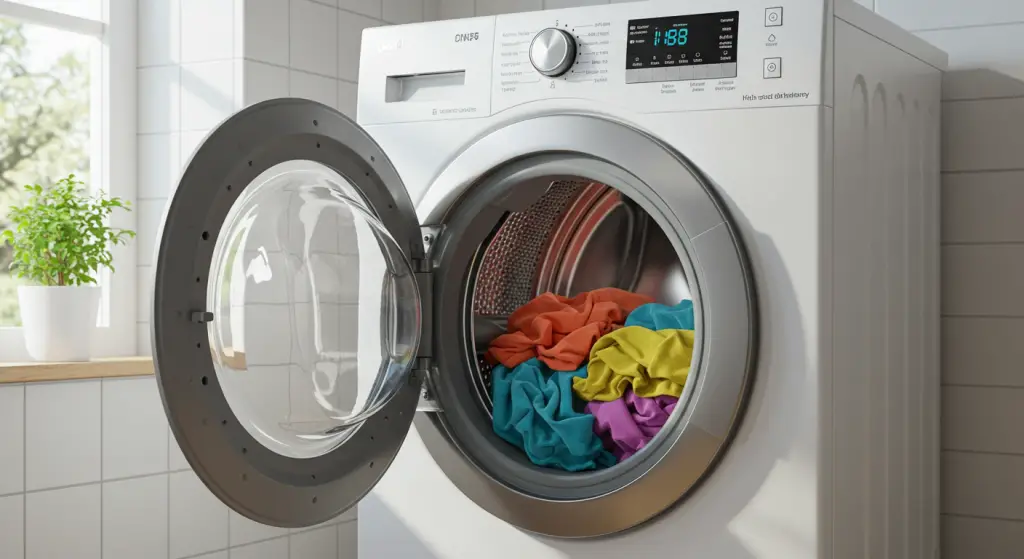
Washing machine: Do you know how much a single wash costs? The figures have finally been revealed.
For most households, the washing machine is an essential appliance — we can’t imagine doing without it. However, it’s also one of the biggest energy consumers in the home. With electricity and gas prices rising sharply in recent years, it’s worth understanding how much each wash actually costs and what factors influence this expense. Once you know the true numbers, it becomes easier to manage your consumption wisely and save money without sacrificing clean clothes.
The Rising Cost of Energy
Electricity and gas bills have soared, increasing by around 64% compared to previous years. In such an environment, every appliance that uses a significant amount of power deserves careful attention, especially those that operate frequently, like the washing machine. While we can’t eliminate laundry from our routines, we can certainly optimize how and when we use our machines to lower costs.
Understanding what determines your washing machine’s energy consumption — and therefore, your utility costs — is the first step. Factors such as the machine’s energy class, load capacity, water temperature, and program duration all contribute to how much each cycle costs.
Understanding Washing Machine Energy Use
A washing machine’s power consumption varies depending on its model, age, and energy efficiency class. Typically, a washing machine consumes between 1,850 and 2,700 watts of power. This difference largely depends on its energy rating — one of the most important details to check when buying or using a machine.
The European energy classification system ranges from A+++ (most efficient) down to D (least efficient). Machines closer to the A+++ category use significantly less electricity and water. Although high-efficiency models often cost more upfront, they save considerable amounts of money over time through lower energy consumption.
For example, a 9-kilogram washing machine with an A+++ energy rating consumes less than 218 kWh per year, which translates to an annual energy cost of under €39. In contrast, a 9-kilogram machine with a D rating can use more than 413 kWh annually, costing over €74 a year. That’s nearly double the expense — a compelling reason to consider energy efficiency when purchasing or upgrading your washing machine.
Water Consumption and Efficiency
Energy isn’t the only factor to consider. Washing machines also consume large amounts of water. Depending on the capacity and program selected, a single wash can use between 50 and 120 liters of water. On average, each stage of a wash cycle — prewash, main wash, rinse, and spin — uses about 15 liters. Choosing eco-friendly or shorter cycles can significantly reduce both water and energy consumption.
Modern washing machines often come equipped with sensors that adjust the water level based on the load size, which helps reduce waste. Using these features effectively is another way to save on household expenses while conserving resources.
Calculating the Cost of a Single Wash
Now that we understand the factors behind consumption, let’s break down the actual cost of a single wash. Consider the higher end of the range — a washing machine that consumes around 2,700 watts during an hour of operation.
If electricity costs approximately €0.25 per kWh, then a one-hour cycle at maximum power will consume 2.7 kWh, costing roughly €0.67 per wash. This is the upper limit for a standard cycle using warm water.
However, most modern washing machines don’t run continuously at full power for an entire hour. The main spike in energy use occurs when heating the water. For a 60°C wash, heating alone can consume between 1.2 and 1.5 kWh, accounting for the largest portion of the total energy cost.
If you lower the temperature to 30°C or 40°C, the energy requirement drops dramatically — in some cases, cutting electricity costs by half. This simple change not only saves money but also helps extend the life of your clothes by reducing heat damage to fabrics.
The Cost of Detergent and Other Factors
Electricity isn’t the only expense associated with doing laundry. Detergent, fabric softener, and even water usage all add to the total cost. On average, each load requires around 150 to 160 grams of powdered detergent, which costs about €0.20 per use.
Adding this to the energy cost, an average wash cycle costs approximately €0.57 — around €0.37 for electricity and €0.20 for detergent. Of course, this figure can vary slightly based on your washing habits, local energy rates, and the efficiency of your machine.
If you wash three loads per week, that amounts to around €1.70 per week, or roughly €88 per year. Over time, even small adjustments — such as switching to lower temperatures, using full loads, and maintaining your washing machine properly — can make a noticeable difference in your utility bills.
How to Reduce Washing Costs
To make laundry more economical, consider adopting these energy-saving habits:
- Wash with full loads – Running half-empty machines wastes both water and energy. Always try to wash full loads to maximize efficiency.
- Use lower temperatures – Washing at 30°C instead of 60°C saves up to 40% of the electricity used per cycle.
- Choose eco or quick programs – Many modern washing machines offer “Eco” modes that use less water and energy by extending wash time slightly.
- Clean the machine regularly – Limescale and detergent residue can make the motor work harder, increasing consumption. Run a maintenance wash once a month to keep it efficient.
- Upgrade to an energy-efficient model – If your current washing machine is over 10 years old, replacing it with an A+++ model can cut energy use nearly in half.
- Wash at off-peak hours – Some electricity providers charge less for energy used at night or early morning. Take advantage of these time-based rates if available.
The Bottom Line
A washing machine is indispensable, but it doesn’t have to be a drain on your finances. Knowing that each wash costs roughly €0.57 on average, and understanding what factors influence that number, empowers you to make smarter, more efficient choices.
By combining mindful energy use with simple household habits, you can continue to enjoy the convenience of clean laundry while keeping your energy bills — and environmental footprint — under control. In the long run, a little awareness and attention to detail can lead to significant savings and a more sustainable home.