Dirty dishcloths, with the basin method they become as good as new
Kitchen towels are indispensable tools in every home. We use them constantly — to wipe spills, dry hands, clean up after cooking, or handle hot cookware. Unfortunately, all that use makes them one of the dirtiest items in the kitchen. Over time, they absorb grease, stains, and unpleasant odors that can linger even after washing. To keep them hygienic and looking fresh, they require a proper cleaning routine that goes beyond a simple rinse in the washing machine.
Here’s how to wash dirty kitchen towels effectively, remove grease and bad smells, and restore their original appearance using natural, eco-friendly ingredients and the simple “basin method.”
Why Kitchen Towels Need Special Care
Kitchen towels often come into contact with food residues, oil, and bacteria from raw ingredients. This combination can quickly turn them into breeding grounds for germs if not washed correctly. A single towel used for days without proper cleaning can harbor more bacteria than a kitchen sponge.
Regular washing helps, but when towels become heavily soiled, stained, or smelly, a deeper cleaning method is needed to restore their freshness and ensure hygiene. The good news is that with just a few natural household ingredients — baking soda, vinegar, hydrogen peroxide, or lemon — you can easily bring them back to life.
The Basin Method: A Simple Routine That Works
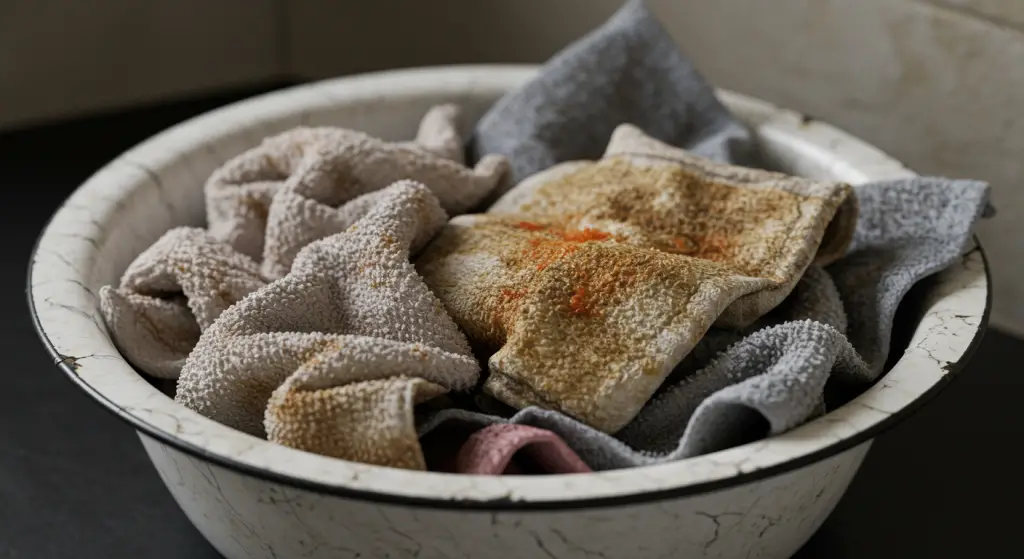
The “basin method” is one of the easiest and most effective ways to deep-clean kitchen towels. It doesn’t require any fancy equipment, just a large basin or sink, hot water, and one of several powerful natural cleaning agents. This method loosens dirt and grease, eliminates bacteria, and neutralizes odors, all while being gentle on fabrics.
Step 1: Using Baking Soda for Deep Cleaning
If your kitchen towels are heavily soiled or greasy, baking soda is your best ally. Known for its deodorizing and stain-removing power, baking soda penetrates deep into fabric fibers and lifts away grime without harsh chemicals.
How to use it:
- Fill a basin with hot water.
- Add four to five tablespoons of baking soda.
- Stir until dissolved.
- Submerge your dirty towels completely and let them soak for at least one hour — or overnight for stubborn stains.
After soaking, you can either hand wash them directly or run them through a regular washing machine cycle. For an extra cleaning boost, add another one or two tablespoons of baking soda directly into the wash. Once dry, your towels will look and smell as good as new.
It’s best to repeat this process regularly, especially if you use your towels daily. Frequent cleaning prevents bacteria buildup and extends their lifespan.
Step 2: White Vinegar for Odor and Grease Removal
Among natural cleaners, white vinegar is one of the most versatile and effective. It acts as both a degreaser and a natural whitener while eliminating persistent odors that ordinary detergents can’t remove. Vinegar also helps soften fabrics and restore their absorbency, which can be reduced by detergent residue.
How to use it:
- Fill a basin with warm water.
- Add one full glass of white vinegar.
- Soak the dirty towels in this solution for several hours or overnight.
The next day, rinse them thoroughly and wash as usual — either by hand or in the machine. Once dry, you’ll notice that the foul smells are gone, and the fabric feels softer and fresher. This method is safe for most fabrics, including both white and colored towels.
Step 3: Hydrogen Peroxide for Whitening and Disinfecting
Hydrogen peroxide (or oxygenated water) is another excellent cleaning agent. It is a mild antiseptic and disinfectant that effectively removes yellowing, stains, and germs — making it a great eco-friendly alternative to bleach, which can irritate the skin and harm fabrics.
How to use it:
- Fill a basin with hot water.
- Add one or two tablespoons of hydrogen peroxide.
- Submerge white kitchen towels (this method is best for white fabrics) and soak for about two hours.
- Rinse well and wash as normal.
This treatment will brighten dull fabrics, remove lingering bacteria, and leave your towels looking crisp and clean. Avoid using hydrogen peroxide on colored towels, as it may cause fading over time.
Step 4: Lemon Juice for a Natural Whitening Touch
If you prefer a fresh, citrus-scented alternative, lemon juice is an excellent natural whitener and deodorizer. The citric acid it contains helps dissolve grease, lighten stains, and neutralize odors — all while leaving a pleasant, clean scent.
How to use it:
- Fill a basin with hot water.
- Slice one or two lemons and add them to the water.
- Place the towels in the basin and let them soak for at least 30 minutes.
- Rinse thoroughly and wash either by hand or in the machine.
Be cautious when handling hot water — use tongs or gloves to avoid burns. Also, limit this method to white or light-colored towels, as lemon juice can have a mild bleaching effect.
Step 5: Drying and Maintenance Tips
Once your towels are clean, it’s important to dry them properly. Damp towels can quickly develop musty smells or mildew. Hang them outdoors in direct sunlight if possible — the sun’s UV rays act as a natural disinfectant and further brighten the fabric. If drying indoors, ensure good air circulation.
For everyday care, avoid using too much detergent or fabric softener, as these can leave residues that trap odors and reduce absorbency. Instead, add a splash of vinegar to the rinse cycle occasionally to keep fibers clean and fresh.
Keeping Your Kitchen Towels Fresh
To maintain hygiene and prevent odors from returning:
- Change kitchen towels frequently, ideally every one to two days.
- Avoid using the same towel for both drying dishes and wiping surfaces.
- Let towels dry completely between uses.
- Store clean towels in a dry, well-ventilated space.
The Takeaway
With a few natural ingredients and simple steps, you can easily restore your kitchen towels to their original freshness — no harsh chemicals needed. Baking soda removes deep grime, vinegar eliminates odors, hydrogen peroxide disinfects and brightens, and lemon juice adds a natural sparkle.
Incorporating this quick basin-cleaning routine into your household chores not only keeps your towels looking new but also ensures a cleaner, more hygienic kitchen. After all, a clean towel is a small but powerful step toward a healthier home.