Dish soap in the toilet, the solution to many problems: what happens if you try it?
How many of us would ever think that pouring dish soap into a toilet could actually solve a problem? At first glance, it might sound wasteful or even odd. Yet, this old-fashioned trick is one of the simplest and most effective home remedies for dealing with one of the most dreaded household issues: a clogged toilet.
It may seem like an unconventional solution, but dish soap can help clear minor blockages and save you an expensive visit from the plumber. Here’s how and why it works — and what other easy tricks you can try before calling for professional help.
When a Toilet Clogs Without Warning
Toilet clogs always seem to happen at the worst possible time — when you least expect it. The water starts to rise instead of flushing away, panic sets in, and you’re left wondering what to do next.
The first and most important thing to remember is not to panic. A blocked toilet is unpleasant, but it’s also a common problem in every home, and in most cases, you can fix it yourself with simple household items.
Regular maintenance is key to preventing clogs. Toilets are designed to handle only human waste and toilet paper. Anything else — even items labeled as “flushable” — can cause blockages over time.
What Not to Flush
One of the main causes of toilet blockages is flushing inappropriate items. These include:
-
Wet wipes (even those marked “biodegradable” or “flushable”)
-
Cotton pads, tampons, or sanitary napkins
-
Paper towels or tissues
-
Q-tips or dental floss
-
Excessive toilet paper
Even some brands of “eco-friendly” or “biodegradable” toilet paper can create problems if used in large amounts. They may dissolve more slowly than expected, contributing to buildup in the pipes.
To avoid future headaches, remember that only two things should ever go down the toilet: waste and toilet paper.
First Step: Stop the Overflow
If the toilet bowl is filling up with water and looks like it’s about to overflow, your first priority is to stop more water from entering the bowl.
Locate the water valve behind the toilet — usually a small knob near the wall. Turn it clockwise to shut off the water supply. This prevents additional flooding while you work on the problem.
If you can’t reach the valve immediately, you can also lift the lid of the tank and pull up the float — the small ball or cup that controls water flow — to stop more water from entering.
Once the situation is under control, you can move on to fixing the clog itself.
Natural Solution: Baking Soda and Vinegar
For those who prefer eco-friendly alternatives to harsh chemicals, baking soda and vinegar can be very effective.
-
Pour about 500 grams (one full box) of baking soda into the toilet bowl.
-
Slowly add one liter of white vinegar.
-
Put on rubber gloves and safety glasses if possible — the mixture will fizz and bubble.
-
After the initial reaction, pour in two to three liters of hot (not boiling) water to boost the effect.
-
Let the solution sit overnight.
This natural reaction breaks down organic materials and softens buildup in the drain. In many cases, it clears the blockage completely by the next morning.
Using a Plumbing Snake or Wire Hanger
If the clog is deeper in the pipe — beyond what the vinegar and baking soda can reach — you can use a drain snake, also called a “spring plunger.”
This flexible metal tool, often used by plumbers, can reach further down the pipe and break up tougher obstructions. Insert it gently into the drain, twist, and push forward until you feel resistance. Then, rotate it to dislodge whatever is stuck.
If you don’t have a drain snake, you can make a temporary version using a metal wire hanger. Straighten it out and wrap one end with a small piece of cloth to protect the porcelain. Then, carefully push and twist it through the drain to loosen the clog.
Always move gently — forcing the wire could scratch the inside of the toilet bowl or damage the pipes.
The Dish Soap Trick
Now for the most unexpected — yet incredibly effective — method: dish soap.
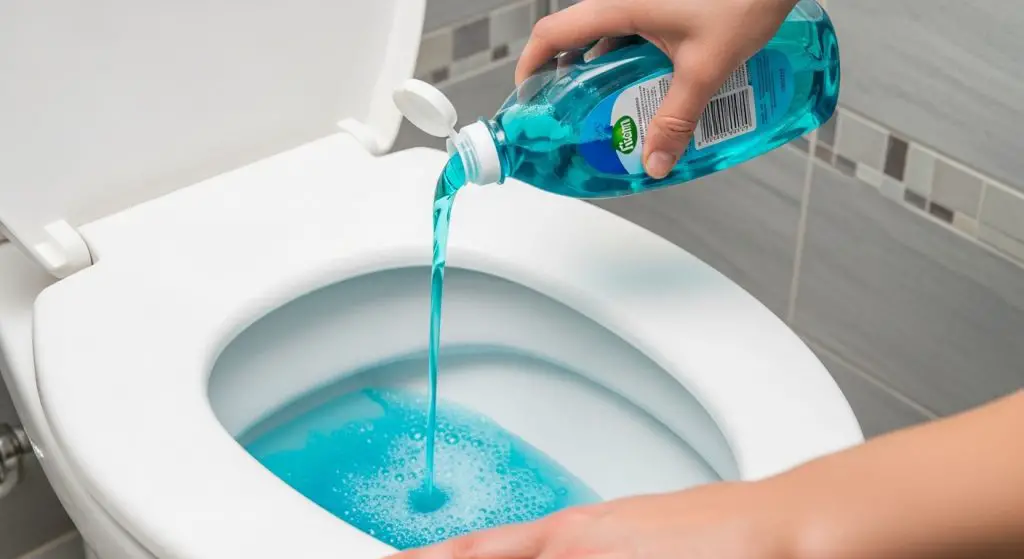
If the clog isn’t severe, pour about half a cup of liquid dish soap directly into the toilet bowl. Let it sit for 10–15 minutes. The soap will sink to the bottom and begin to lubricate the pipes, helping to loosen whatever is stuck.
Next, fill a bucket with hot (not boiling) water and pour it from waist height into the toilet bowl. The combination of the soap’s lubricating properties and the force of the hot water can help push the blockage through the pipe.
The science behind this trick is simple: dish soap reduces the surface tension of the water, making it more slippery and helping debris slide through more easily.
If the water begins to drain slowly after a few minutes, you’re on the right track. If not, give it another 10–15 minutes before repeating the process or moving on to the next method.
Using a Plunger
If the dish soap and hot water don’t do the job, it’s time to use a plunger. This classic tool is still one of the most effective ways to unclog a toilet.
-
Make sure the plunger is completely submerged in water — the rubber cup must cover the drain opening entirely.
-
Push down firmly, then pull up sharply several times to create pressure and suction.
-
After about 10–15 pumps, lift the plunger to see if the water drains.
If the plunger doesn’t create a good seal, soak it in hot water first to soften the rubber and improve its grip. This simple adjustment can make a big difference.
With luck (and a bit of muscle), the pressure will dislodge the obstruction and restore normal flushing.
When to Call a Professional
If none of these methods work and the water remains high in the bowl, it’s best to call a plumber. Persistent clogs may indicate a deeper blockage in the main sewer line — something only professional tools can reach.
Before they arrive, avoid flushing again, as this could cause an overflow. Instead, scoop out any excess water using gloves and a bucket to make the plumber’s job easier.
Final Thoughts
Pouring dish soap into the toilet might sound like a strange idea, but it’s a clever and inexpensive way to deal with minor clogs. Combined with hot water, it can loosen greasy residues and organic buildup without harsh chemicals or damage to your plumbing.
Whether you choose dish soap, baking soda and vinegar, or the trusty plunger, these household tricks can save you time, money, and frustration. And if you remember to avoid flushing anything other than waste and toilet paper, you’ll likely prevent future blockages altogether.
Sometimes, grandma’s simplest ideas turn out to be the most effective ones — even when they involve something as unexpected as dish soap in the toilet.