Put onions in the freezer: why you should do it every night
Onions are one of the most essential ingredients in any kitchen, especially in Italian cuisine. They are the foundation of countless dishes—from rich sauces to hearty soups and flavorful meat dishes. Beyond their culinary importance, onions are also packed with health benefits. They’re rich in antioxidants, vitamin C, and vitamin B6, making them as nutritious as they are delicious.
Typically, onions should be stored in a cool, dark, and dry place to preserve their nutrients and flavor. However, most people don’t realize that freezing onions can be a brilliant way to save time, reduce waste, and even avoid tears while chopping. Here’s everything you need to know about why—and how—to store onions in the freezer.
The Problem of Half-Used Onions
We’ve all been there: you slice open a large onion, use half for your recipe, and then the other half ends up forgotten on the counter or wrapped loosely in the fridge—only to be thrown away later. Many assume that once an onion is cut, it can’t be reused safely because it loses nutrients or becomes toxic. Fortunately, that’s a misconception.
The truth is, a cut onion can be stored and preserved perfectly—if you freeze it correctly. Freezing not only keeps onions fresh for longer but also helps you avoid waste and makes cooking more convenient. In fact, freezing whole or chopped onions before cooking can make your everyday kitchen routine a lot easier.
The Hidden Benefit: Fewer Tears When Chopping
One surprising advantage of freezing onions is that it helps prevent tears while cutting. Few kitchen experiences are as uncomfortable as chopping onions and feeling your eyes sting and water uncontrollably. This happens because onions release a gas that irritates the eyes, triggering tears as a natural defense mechanism.
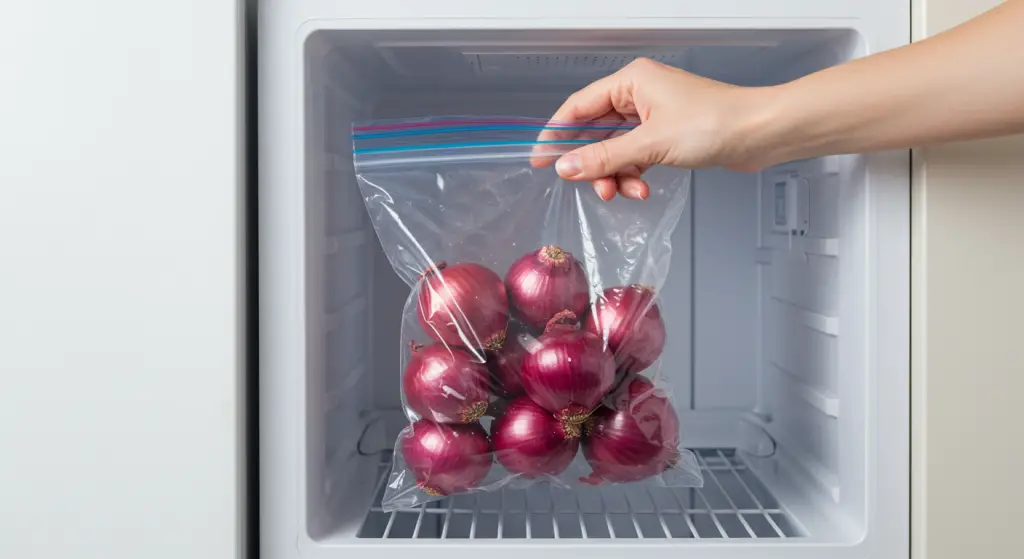
But there’s a simple trick: chill your onions in the freezer for about 15 minutes before peeling and cutting them. The cold temperature slows down the release of the sulfuric compounds responsible for eye irritation, allowing you to chop with ease and without tears.
If you prefer not to freeze them, another option is to place onions in a bowl of ice water before cutting, or to keep a damp towel near your cutting board to absorb some of the irritating gases. Some even choose to chop onions directly underwater, which prevents the gas from reaching the eyes altogether.
Why Onions Make You Cry
To understand why this trick works, it helps to know what actually causes tears when cutting onions. Onions absorb sulfur from the soil, storing it in molecules inside specialized cells called vacuoles. When you cut an onion, these cells break open, releasing an enzyme that reacts with sulfur compounds to produce sulfenic acid, which quickly turns into a gas similar to sulfuric acid.
As this gas rises toward your eyes, your tear glands activate to flush it out, causing the familiar stinging and watery sensation. Freezing or chilling onions slows this chemical reaction, meaning less gas is released and less irritation occurs.
How to Freeze Onions the Right Way
Freezing onions doesn’t just prevent tears—it’s also a time-saving trick for busy cooks. You can prepare and freeze onions in advance so they’re ready to use whenever you need them.
Here’s how to do it properly:
-
Blanch first (optional but recommended): Drop peeled onions into boiling water for 2 minutes. This helps slow down spoilage and prevents the strong onion smell from spreading through your freezer.
-
Cool and dry: Remove the onions from the water and let them cool completely. Then pat them dry with a clean kitchen towel.
-
Choose your format: You can freeze onions whole, sliced, chopped, or diced—depending on how you usually use them in recipes.
-
Package correctly: Place the onions in freezer-safe bags or airtight containers. For best results, remove as much air as possible to avoid freezer burn.
-
Label and store: Write the date and portion size on each bag before placing them in the freezer. Frozen onions can last for up to six months.
When you’re ready to cook, you can add frozen onions directly to soups, sauces, or stir-fries—no need to thaw. They’ll cook perfectly and release their natural sweetness just like fresh ones.
Odor Control and Smart Storage
If you’re worried about your freezer smelling like onions, don’t be. There are easy ways to keep the strong scent under control. You can use anti-odor storage boxes—available in many home goods stores or online—which are specifically designed to contain pungent smells. Stainless steel containers are particularly effective, as they block odors completely and are reusable.
For extra convenience, try freezing onions in small portions. Divide chopped onions into ice cube trays or small freezer bags, each containing just enough for one meal. That way, you can take out only what you need without defrosting a large batch.
Why It’s Worth Freezing Onions
There are plenty of reasons why freezing onions makes sense, especially for those who cook often or have a busy schedule:
-
Less waste: You’ll no longer throw away leftover onion halves.
-
Time-saving: Pre-chopped onions mean faster meal prep.
-
No more tears: Freezing prevents the eye-burning gas from forming.
-
Convenience: Onions are always ready to use, no peeling or chopping required.
-
Fresh flavor preserved: Freezing maintains the taste and nutritional properties of onions.
It’s also important to store fresh onions properly before freezing. Keep them in a dry, dark place with good ventilation—never near potatoes. When stored together, onions and potatoes release gases that cause each other to spoil faster. If kept in a humid environment, onions can become soft and start to rot.
Final Thoughts
Freezing onions is a simple, practical, and eco-friendly kitchen hack that can save time, reduce waste, and even make cooking more enjoyable. Whether you want to stop crying while chopping, preserve leftover onions, or have prepped ingredients ready at all times, the freezer is your best friend.
So next time you slice an onion, don’t throw away the leftover half—freeze it instead. Your eyes, your wallet, and your taste buds will all thank you.