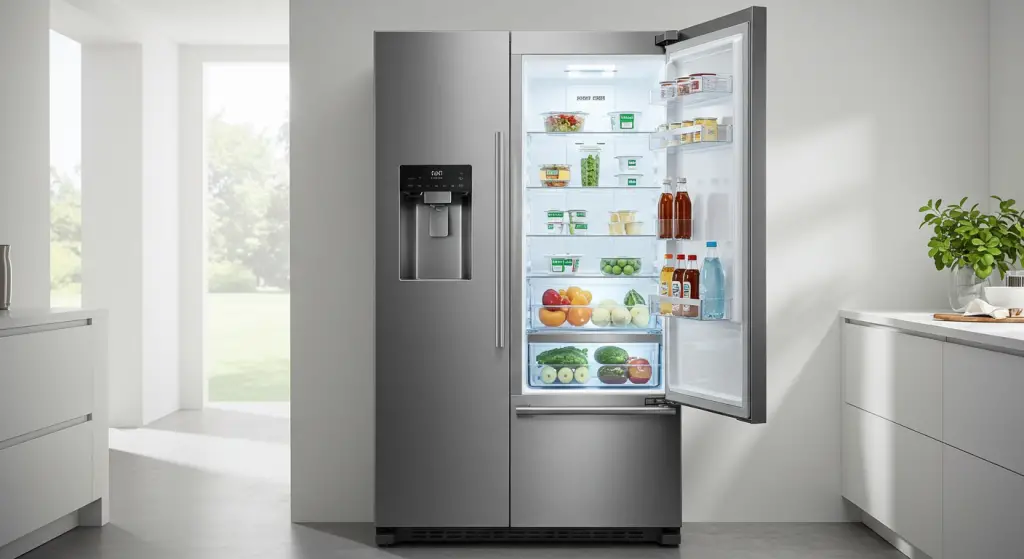
The refrigerator is the appliance that consumes the most energy: if you put it here you save money.
The refrigerator is one of the most important appliances in any household. In today’s world, living without one is almost unthinkable. It helps us store and preserve all kinds of food for longer periods, reducing waste and making daily life much easier.
Most people assume they already know how to use their fridge efficiently. However, very few are actually aware of the small but crucial tricks that can significantly cut down electricity consumption—saving up to €150 a year on energy bills.
With electricity prices at record highs and families struggling under the weight of rising costs, learning to optimize how we use our household appliances has never been more important. Fortunately, a few simple adjustments can make a big difference.
Skyrocketing Energy Bills and the Search for Savings
Over the past year, electricity bills across Europe—and particularly in Italy—have reached unprecedented levels. Some households are now paying as much as €1,000 every two months for utilities.
What’s most frustrating is that family habits and energy use haven’t really changed; it’s the cost of gas, raw materials, and electricity that has surged. As a result, families are constantly searching for practical ways to reduce their bills without sacrificing comfort or convenience.
One of the easiest and most effective ways to save energy is to rethink how we use—and where we place—our refrigerator.
The Golden Rule: Where You Place Your Fridge Matters
The first and most important rule for cutting fridge-related energy costs is proper placement. The refrigerator should always be positioned as far away as possible from heat sources, such as ovens, stoves, radiators, or direct sunlight from windows.
Why? Because when the external environment around the fridge is warm, the appliance must work harder to maintain a low internal temperature. That extra work translates directly into higher energy consumption.
It’s also important not to place the refrigerator too close to the wall. Leaving a few centimeters of space allows heat to disperse more efficiently. Without proper ventilation, the motor can overheat and be forced to run longer cycles, increasing electricity usage and shortening the appliance’s lifespan.
Built-in or enclosed refrigerators are particularly prone to this issue. Because air cannot circulate freely around them, they tend to overheat, causing the compressor to work twice as hard.
Manufacturers generally recommend leaving at least 5 cm of space on each side and 10 cm at the top to allow proper airflow. Following these guidelines alone can reduce your fridge’s energy use by a significant margin.
Choosing the Right Size for Your Household
Another key factor in refrigerator efficiency is choosing the right size for your needs. Many people mistakenly believe that bigger is better, but in reality, an oversized fridge wastes a lot of energy if it’s not fully used.
For example, a couple without children doesn’t need a massive, family-sized refrigerator. Running a large appliance that’s only half full forces the system to maintain low temperatures unnecessarily, leading to energy waste.
Instead, it’s wiser to select a compact or mid-sized fridge that matches your household’s daily needs. Not only will this consume less power, but it will also save you money in the long run.
When shopping for a new refrigerator, always pay attention to its energy efficiency rating. Modern appliances with a Class A or A+ rating are much more energy-efficient than older models.
A new energy-efficient fridge can save around €50 per year, while an outdated model could cost you €150 more annually in extra electricity consumption.
Setting the Right Temperature
The correct temperature settings are crucial to ensure your fridge operates efficiently without overworking.
-
The refrigerator compartment should be set between 3°C and 5°C.
-
The freezer should be maintained between -15°C and -18°C.
Keeping the temperature lower than necessary doesn’t make your food last longer—it just forces the motor to consume more energy.
Every shelf in the fridge has a slightly different temperature range, so it’s important to organize your food strategically:
-
Fridge door: Ideal for items that don’t need extreme cold, such as butter, beverages, sauces, and cheese.
-
Top shelves: Slightly warmer; best for eggs, leftovers, desserts, and condiments.
-
Bottom shelves: The coldest zone (around 0°C); perfect for raw meat and fish.
-
Crisper drawers: Slightly warmer (around 2°C); meant for fruits and vegetables.
Proper organization ensures better airflow, more consistent cooling, and less strain on the compressor.
Don’t Overload the Refrigerator
A common mistake is overfilling the fridge. While it might seem efficient to store everything in one place, an overcrowded fridge actually blocks air circulation, making it harder to maintain the correct temperature. The compressor ends up working more often, increasing energy consumption and wear on the appliance.
On the other hand, an empty fridge isn’t ideal either—it loses cold air too quickly when the door is opened. The best approach is to keep it reasonably stocked, allowing food items to retain coldness and stabilize internal temperatures.
Foods That Should Never Go in the Fridge
Finally, many people make the mistake of refrigerating foods that are better kept at room temperature. Certain products lose flavor, texture, or freshness when stored in the cold.
Here’s a quick list of items that should stay out of the fridge:
-
Mozzarella (especially fresh varieties)
-
Green beans and cucumbers
-
Tomatoes and zucchini
-
Onions and potatoes
-
Olive oil and mustard
These foods are best kept in a cool, dry area away from direct sunlight. Storing them in the fridge not only wastes space and energy but can also shorten their shelf life.
The Bottom Line
By paying attention to where you position your refrigerator, how you set its temperature, and what you store inside, you can dramatically improve energy efficiency.
A few small adjustments—like keeping it away from heat sources, leaving enough space for ventilation, and choosing the right size and model—can help you save up to €150 per year on electricity bills.
In times of rising energy costs, these simple yet effective habits not only ease financial pressure but also contribute to a more sustainable household. After all, using your fridge wisely doesn’t just keep your food fresh—it keeps your budget healthy too.